What's new
DiscussionHQ - General Discussions

DiscussionHQ is a general discussion forum that has opened December 2024!
We provide a laid back atmosphere and our members are down to earth. We have a ton of content and fresh stuff is constantly being added. We cover all sorts of topics, so there's bound to be something inside to pique your interest. We welcome anyone and everyone to register & become a member of our awesome community.

Weather latest: Amber cold health alert now issued for parts of UK until Saturday

Smithy

The Awesome One!
Administrator
Joined
Dec 15, 2024
Messages
2,043
Location
England, UK
The most serious alert covers the North East, North West and Yorkshire and the Humber, but the rest of England is also going to feel the chill over the coming week, forecasters say.
Cold health alerts have been issued for large parts of the UK from midday on Monday until Saturday morning.

The UK Health Security Agency (UKHSA) issued an amber cold health alert for the North East, North West and Yorkshire and the Humber on Monday.

skynews-scottish-highlands_7084124.jpg

Source: https://news.sky.com/story/weather-...ssued-for-parts-of-uk-until-saturday-13471658
 
It looks like you are getting the cold front like we had a week ago, @Smithy . I see the low is -7C, which it said was like 19F , which is about what we had here in Alabama last week.
Some places reported that was was snowing, but we didn’t see any.

Why do I they call it a health emergency over there ? In the northern states , it is common to have below zero F temperatures most of the winter, and we just went ahead with life regardless.
Snow here in the South US is a big problem for roads and driving, because there are no snowplows or any kind of equipment to deal with snow and ice; so even an inch of snow brings everything to a halt here.
Do you expect to get snow or ice where you live, Smithy ?
 
Frost, ice this week and maybe a little bit of snow on Friday nothing much.

In England, UK -7c could feel like -12c the humidity over here is different than other countries.
Like in the summer 30c could feel hotter as the humidity is different like our houses aren't made for hot weather but great for winter.

How humidity affects perceived temperature
  • On hot days:
    High humidity prevents sweat from evaporating quickly, which is the body's main way of cooling itself. This makes the air feel hotter and more oppressive, an effect measured by the heat index.

  • On cold days:
    High humidity makes cold temperatures feel more intense. When you are wet or wearing damp clothes, your body loses heat much faster than it would in dry air. This can lead to a greater risk of hypothermia or frostbite in freezing conditions.
How humidity affects actual temperature
  • Global energy budget:
    Humidity affects the planet's energy balance. Water vapor absorbs and traps heat, acting as a potent greenhouse gas.

  • Surface cooling:
    The process of evaporation removes heat from a surface, which cools it. For example, when water evaporates from the Earth's surface, it takes latent heat with it.

  • Air temperature:
    Humid air has a higher heat capacity than dry air, meaning it takes more energy to raise its temperature and requires more heat to cool it down.
 
That is a great point, Smithy ! Down here in Alabama in the winter , there is a LOT more humidity compared to what we had when i lived in northern Idaho. So, even though it might be way below -0F in Idaho, it was a dryer air.

In the summertime, it can be almost impossible to breathe with the high humidity, even going outside in the early morning before the heat gets bad, you are still dripping just from the humidity. I try to do anything that need to be done as early as possible in the summer, and then stay inside out of the heat of the day, or be in our little swimming pool in the back yard to keep cool.

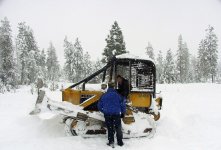
I miss living up north where the air is so much better, but I sure do not want to have to deal with shoveling all that snow anymore, and having to have someone with heavy equipment plow out the driveway.
This was our neighbor who had come over to plow us out so we cold get in and out of the long driveway. That is my oldest son chatting with the neighbor.

IMG_1119.jpeg
 
It appears that our expected wet and snow is holding off, still sunny out my window. Things are "warmer" now in the 40s down to 20F overnight, but not steady-cold enough for snow accumulation quite yet here.
 
Frost, ice this week and maybe a little bit of snow on Friday nothing much.

In England, UK -7c could feel like -12c the humidity over here is different than other countries.
Like in the summer 30c could feel hotter as the humidity is different like our houses aren't made for hot weather but great for winter.

How humidity affects perceived temperature
  • On hot days:
    High humidity prevents sweat from evaporating quickly, which is the body's main way of cooling itself. This makes the air feel hotter and more oppressive, an effect measured by the heat index.

  • On cold days:
    High humidity makes cold temperatures feel more intense. When you are wet or wearing damp clothes, your body loses heat much faster than it would in dry air. This can lead to a greater risk of hypothermia or frostbite in freezing conditions.
How humidity affects actual temperature
  • Global energy budget:
    Humidity affects the planet's energy balance. Water vapor absorbs and traps heat, acting as a potent greenhouse gas.

  • Surface cooling:
    The process of evaporation removes heat from a surface, which cools it. For example, when water evaporates from the Earth's surface, it takes latent heat with it.

  • Air temperature:
    Humid air has a higher heat capacity than dry air, meaning it takes more energy to raise its temperature and requires more heat to cool it down.
Good that you point out that water vapor is the most potent of the greenhouse gases. If they really want to cool the planet and protect us from global warming, they would cover the oceans, seas and lakes with a plastic film to lower the planet's temperature. Water vapor is far more potent than is CO2 or methane and in far greater quantities in the atmosphere.
 

Users who are viewing this thread

Back
Top