What's new
DiscussionHQ - General Discussions

DiscussionHQ is a general discussion forum that has opened December 2024!
We provide a laid back atmosphere and our members are down to earth. We have a ton of content and fresh stuff is constantly being added. We cover all sorts of topics, so there's bound to be something inside to pique your interest. We welcome anyone and everyone to register & become a member of our awesome community.

Metals, a Hedge or Investment Depending on Your Views... or a Sucker's Bet?

Once you budding McDucks begin stacking, it probably doesn't hurt to be aware that silver can be delicate and should not be stored with gold.

Tarnishing and Corrosion:
Silver tarnishes easily, and when stored with gold, it can transfer this tarnish to the gold, causing discoloration.​
Galvanic Corrosion:
When two different metals are in contact, they can create a galvanic cell that accelerates corrosion, potentially damaging both metals.​
Alloys and Purity:
Different types of gold (like 10k, 14k, 18k, etc.. up to but not including pure 24k) have different alloy compositions, and these alloys can react differently with silver, leading to potential issues.​
Physical Damage:
Even without chemical reactions, storing items together can lead to scratching or denting, especially if they are different shapes or sizes.​

These are issues for bullion, numismatic coins, or jewelry items.

One other thing to know is that Temu has been selling counterfeit silver dollars for quite a while and they are showing up on ebay and at coin shops (turned down when checked by dealers) I bought one for $1.75 just to see one from Temu. I could instantly feel it was lighter and thinner. The 'tarnish' rubbed off but could be replaced if one were into that kind of thing.
 
I was advised to buy junk silver back in the eighties along with freeze dried food. (the latter is still quite edible). We have hubby's house and my farm but also a bug out bag and a granny shopping cart if not a travois.
The latest floods show that you can't be prepped for everything and carrying even one bag of silver is like carrying a bowling ball.
In my bug out bag I have a couple of good knives, a sharpener, a flint and other fire starters (Just saw a YT about nettle being the BEST tinder. I like dry pine needles too.), Stalking The Wild Asparagus... Gotta find my snare wire. A hatchet--all slightly heavy. Socks, emergency blankets, GSE...
If you have nothing and have been robbed, the one thing they can't take is knowledge. Try stuff out now. I know my aim is off often now. My hands shake and I can't walk. I can improve some but not if I don't now.
Problem is, we might survive but will we thrive and with mosquitoes would we want to.
; )
 
I doubt you really need to throw a bag of silver into the pack on your back as you disappear into the woods. 😜

More likely even if you did you'd make a number of "drops" along the way. Double up ziplock sandwich bags with half a handful of coins. Bury them on the far-side bases of trees away from your trail.

10 dimes should bring $27 in trade. Same for 4 silver quarters or two half-dollars. You can fit $50 in trade silver in one little change purse with no strain. Carrying one of these in each of two pockets should be enough to bring a full tank of gas if needed.

But maybe I'm off on this. I haven't thought about it much before.
 
Maybe somebody can clarify this for me, but there seems to be a distinction between a "coin" and a "round" of metal. I think this is close:

A coin is almost always struck in minting, a round might be struck or cast.

A coin always is (or once was) legal tender, a round never is. The round is simply coin-like in shape and features.

Both coins and rounds have been minted by private organizations as well as governments. Today coins are almost entirely the province of government mints though.

Private "tokens" are a third thing. Not coins, but not merely rounds of metal. Historically these were used in "company towns" and frontier villages for strictly local trade. Today they are most common for things like gaming or transportation.

A round is just a standardized unit, a hunk of metal. Though "standardized" mainly just in weight and purity, usually without guarantees though some "private mints" who issue them have a high community reputation.


I suppose I shouldn't be too surprised. Every hobby seems to garner its own lexicon and lore and conventions. I found that similar things exist among people who collect old porcelain mini-dolls and doll heads. Or (and this can overlap with the latter) people who collect old crap found along riverbanks and beaches and even in old dumps. Until just a few years ago I don't think I had ever heard of "mudlarking." :ROFLMAO:
Sounds like you fully understand the difference between a round and a coin to me.
 
I think this became topical for two reasons.

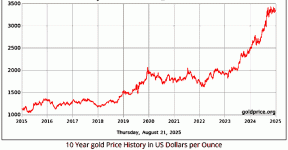
One is that gold's price has tripled in 10 years. Or you can flip that and say Dollars have lost 2/3 of their buying power over the last decade.

Chart.gif


Another is the persistent rumor of Dollar (i.e. gold) revaluation.
The Official Price of Gold is Only $42.22/oz.

For many decades now Americans have been allowed to own gold and silver and, despite gold and silver trading in the vicinity of $1200/oz. and $18/oz. respectively, the “official” price of gold is still $42.22 per ounce.
The thinking here is that the official "price of gold" might be reset to anything up to the current spot price or even higher like $7,500 or $10,000 per ounce!

This sounds completely wacky to me, because the Dollar becomes really tiny in buying power.
 
There is also another way to get into gold, in a small way.

"Fractional gold" seems to apply to gold coins of 1/2 ounce, 1/4 ounce, and 1/10 ounce fine gold weights. These seem to typically have more added copper and silver to make them (a.) easier to strike detail into, and (b.) more resistant to wear and scratches.

But there are also tiny bars of gold on the market. Some are quite thin and small weighing as little as 1 gram. These are normally sold laminated within some sort of "card" with a clear plastic window for viewing.

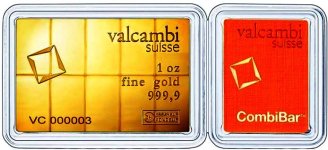
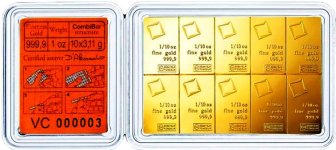
However there is also something called (from one mint) a CombiBar:
Valcambi offers customers a variety of high-quality options when it comes to gold bars. In this product, the 10 x 1/10 oz Valcambi Gold CombiBar - In Assay gives customers the opportunity to purchase one troy ounce of gold that can be separated into many smaller pieces, commonly referred to as a CombiBar.

Valcambi CombiBars are offered in many different sizes and in both silver and gold. These bars are constructed to form one large bar with many divisible pieces. This gives consumers the option to utilize a smaller portion of the gold bar if desired. The 10 x 1/10 oz Valcambi Gold CombiBar - In Assay consists of ten 1/10 oz gold bars that form a one-ounce gold bar.

This bar can be purchased at a low premium over gold spot, making it a great purchase for investors. Each individual 1/10 oz bar is struck with .9999 pure gold, giving customers another reason to love this product!

Each CombiBar ships in a protective assay card. This protects the pieces from breaking in transit and allows for a gorgeous presentation of the gold bullion.
Combi Front.jpg
Combi Back.jpg

The idea here is that you have a bar of gold (here a 1 oz. bar) that is scored into "bits" (here 1/10 oz.) that could be broken off and spent incrementally.

Right now these sell for slightly north of $3500, so the bits would probably go for $350 (or a bit less, being broken off the parent bar). Local dealers may well have a bunch of the loose bits. My guess is that if they buy them, they probably go off to the wholesale refiner for melting.

They also come in smaller sizes and come from a number of mints.


When I saw these bars at the coin shop I immediately thought of the old "Pieces of Eight" - which is of course why a quarter is referred to as "two bits" even today. While I was in the coin shop I was too much of a deer in the headlights to think about asking whether they had a box of "bits" in the store they might sell off individually.
 
Pictures are nice for brightening up a post. 😜

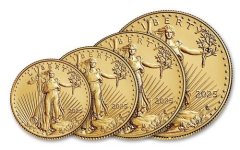
Here are the American Gold Eagle coins in 1/10, 1/4, 1/2, and 1 ounce sizes:

American Gold Eagle Coins.jpg
  • The 1/10 ounce Gold Eagle is denominated as a $5 coin.
  • The 1/4 is a $10 coin.
  • The 1/2 is a $25 coin.
  • The full ounce is a $50 coin.
These also vary in thickness as well as diameter of course, in order to achieve the different weights of gold in each coin size.
  • The 1/10 ounce Eagle is 16.5 mm across
    • Somewhat smaller than a regular U.S. dime at 17.91 mm across.
  • The 1 ounce Eagle is 32.7 mm across.
    • A U.S. Washington quarter is 24.26 mm.
    • The now far less common Kennedy half dollar is 30.61 mm in diameter.
    • The old Eisenhower dollar is 38.1 mm.
Each of the four sizes contains 91.67% gold (22 karat), 3% silver, and 5.33% copper.

The 22k gold alloyed makeup of Gold Eagle coins stands in contrast to the 24k Gold Buffalo Coin, which is minted entirely from 0.9999 fine gold, and therefore weighs less (1 troy ounce or 31.1035 grams gross).

Being pure gold, the American Gold Buffalo is more easily scratched and dinged. For this reason people try to handle them far less, since in excellent condition they tend to command higher premiums (markups over the gold spot price) when sold. Bad scratches or rubs might even cause a coin dealer to turn them down or offer under melt price!
 
A recent innovation:

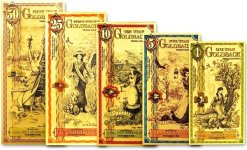
A Goldback is a brand of currency that features physical 24-karat gold within a clear polymer film, designed to serve as a store of value and a means for everyday transactions in participating states like Utah, Nevada, and New Hampshire. Unlike traditional gold coins or bars, Goldbacks are divisible, offering small, measurable amounts of gold that can be spent on small purchases, making them a convenient, fractional way to use gold for commerce.
Utah Goldbacks.jpg
These have existed for a few years now, but they have begun to spread little by little.

State laws vary in the U.S. but more States are enabling these in legislation as well as opting to use gold and silver for paying and even refunding taxes. Some States charge sales tax on gold and silver, while others do not.

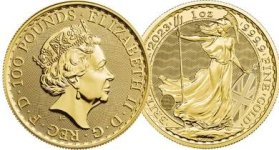
In other places like the UK there are taxes on most gold and silver transactions aside from certain coinages such as Britannia coins:

Brittania Coins.jpg
 
Once you get above the "retail" level that most of us can only aspire to afford to dabble in... things start to get very political. Especially today.

There are cartels like the LBMA and of course The Bank of England and other collaborating London banks and The Crown.
LBMA stands for the London Bullion Market Association, an international trade association that governs the global precious metals market, particularly for gold and silver. It sets strict industry standards for bullion products and refining processes to ensure purity and quality, maintains the internationally recognized Good Delivery List of approved refiners, and provides global benchmark prices for gold and silver through its administration of an electronic auction process.

This is one of the legs underpinning the Global Imperial System which has long opposed modern liberal populist alternatives that came out of The Enlightenment.
The Enlightenment was an 18th-century European intellectual and cultural movement, also known as the Age of Reason, that emphasized reason, rationalism, and the scientific method to question traditional authorities and improve society. Thinkers applied these principles to human institutions, advocating for progress, liberty, and the rights of individuals, which heavily influenced the American and French Revolutions.

At the moment the LBMA and BoE appear to be nearly on their backs, with reserves of both gold and silver falling near a level of default on obligations. A big part of this seems to be tangible practical efforts underpinning BRICS.

Of course a lot of silver and gold "paper" on the stock market is being converted lately as investors are standing for delivery in physical metals.

We don't hear a lot about platinum, but it might become more important than silver soon. Something fishy seems to have begun with platinum.


It's all over my head though. I'm no economist and I've never even owned any stock outside what the Funds in my small 401(k) happen to hold.
 
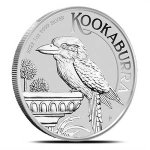
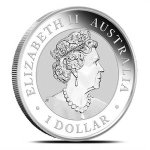
One of the most popular coins, though production is limited and ownership is rarer here in the U.S., are the gold and silver Australian Kookaburra coin series:

A K Front.jpgA K Back.jpg
Each year has a different picture on the front, while the back gets a profile of the current ruling Commonwealth Tyrant (like Canadian and other such nations' coins).

People just like the bird!
 
Retail buyers of metals seem to fall into several overlapping categories:
  • Investors, diversifying into metals as wealth preservation rather than betting on significant profits over time.
  • Numismatic collectors, for the appreciation of history and beauty coins can represent. Some of this can feel a little OCD when they attempt to accumulate every year, every image used, etc. of coin minting. Sort of like penny collectors, or collectors of those U.S. State quarters. Some also branch into commemoratives even where those might be medallions or rounds rather than government coins.
  • Stackers, where volume and weight perhaps mean the most. Because of the lower prices, silver seems to be the metal of choice. Sometimes copper, but the price-density is low so a "stack" can quickly become just so much dead weight.
  • Magpies, constantly buying a little more, and a little bit more. Perhaps no real plan, but they can get on an acquisition jag much as some people get with shoes or ceramic owl knickknacks, or whatever.
I suppose those are obvious. Maybe there is another category: the Voyeur who doesn't buy anything but looks it all over with interest, if even in vain. :ROFLMAO:
 
Watching videos on the subject, things seem all over the place. I suppose opinions... well everybody has them. :ROFLMAO:

A lot of the stackers seem to try to convince themselves that they're "investors" but then comments suggest that there's a lot of magpie in there.

I'm hearing the suggestion of stacked silver and some gold as an emergency fund. I suppose if you are in the coin shops every other day that might appear sensible but I think it just isn't liquid enough. Cash in the bank spends a lot more freely when you get that big transmission replacement bill on your Kia, Dude! 😜

Prudence and a tight grip on financial reality doesn't seem to be the strong suit of far too many playing in the metals arena.

Given the money to move around I think cash in the bank has to come first as an emergency fund. Metals may make sense as savings diversification, but I feel that has more in common with things like multi-year CDs or U.S. Savings Bonds. Stuff you don't just cash out the day your roof starts leaking,
 
There can certainly be scams involved, but if you buy from a reputable agent or dealer, there is little to no risk involved and lots of benefits.
If you can find a reputable agent or dealer. In my opinion, they're like used car salesmen in Herb Tarlek suits, there are 1,000s of them, but only a few are actually honest.
 
:ROFLMAO: I certainly recall that TV show, but had forgotten (repressed?) Herb.

This guy tries, but he tries a little too hard and misses the mark. His costume is a bit too cartoonish and the colors too saturated here.


For all of their garishness, Herb's outfits were more "Earth-toned" and believable salesman late 70s/early 80s attire. Mostly on the spectrum between Hunter's Plaid and Disco.

 
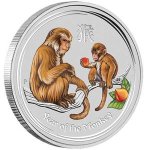
Another oddity is "colorized" coins. Mostly in silver, but also some are created in gold.

I have no idea what these are "painted" with. Maybe enameled?

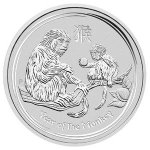
Here is the Perth Mint 1 oz. silver, both plain and colorized by the mint:

Monkey.jpgMonkey Colorized.jpg
 
Local coin shops have recently begun an odd trend in the U.S. - at least based on coin shop YouTube channels and web site newsletters and blogs.

Some are refusing to buy back gold and silver foreign-minted coins. It sounds like this is local or regional, but some coin shops are saying they might have to stop themselves.

Canada's Maple Leaf used to be very easy to liquidate. But it is on the list now, along with anything from the UK, South Africa, and Australia. Austrian is a little better accepted, but everything else is getting tough to sell back to local dealers.

For some reason this is being attributed to the expected Fed rate cut in September/October.

I guess the retail enthusiast market is as driven by whim and rumor as anything having a collector aspect to it. My guess is that dealers don't want foreign coins simply because they aren't selling well right now. The rest of the world is so antagonistic toward the U.S. that individuals are pushing back out of patriotism.
 
I think this became topical for two reasons.

One is that gold's price has tripled in 10 years. Or you can flip that and say Dollars have lost 2/3 of their buying power over the last decade.

View attachment 1037


Another is the persistent rumor of Dollar (i.e. gold) revaluation.

The thinking here is that the official "price of gold" might be reset to anything up to the current spot price or even higher like $7,500 or $10,000 per ounce!

This sounds completely wacky to me, because the Dollar becomes really tiny in buying power.
My first job was for $2.75 hr. And that was for the county! A gov't job.
 

Users who are viewing this thread

Back
Top