What's new
DiscussionHQ - General Discussions

DiscussionHQ is a general discussion forum that has opened December 2024!
We provide a laid back atmosphere and our members are down to earth. We have a ton of content and fresh stuff is constantly being added. We cover all sorts of topics, so there's bound to be something inside to pique your interest. We welcome anyone and everyone to register & become a member of our awesome community.

Dazzled by Zebras

Joe Riley

Seemly Member
Joined
Mar 11, 2025
Messages
2,561
Yipes...Stripes!🦓
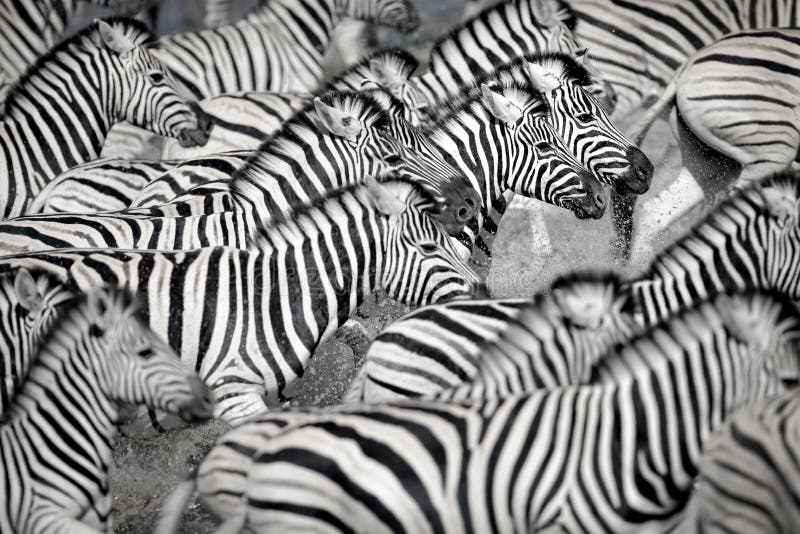
dazzle-zebra-etosha-national-park-dazzle-zebra-145471232.jpg


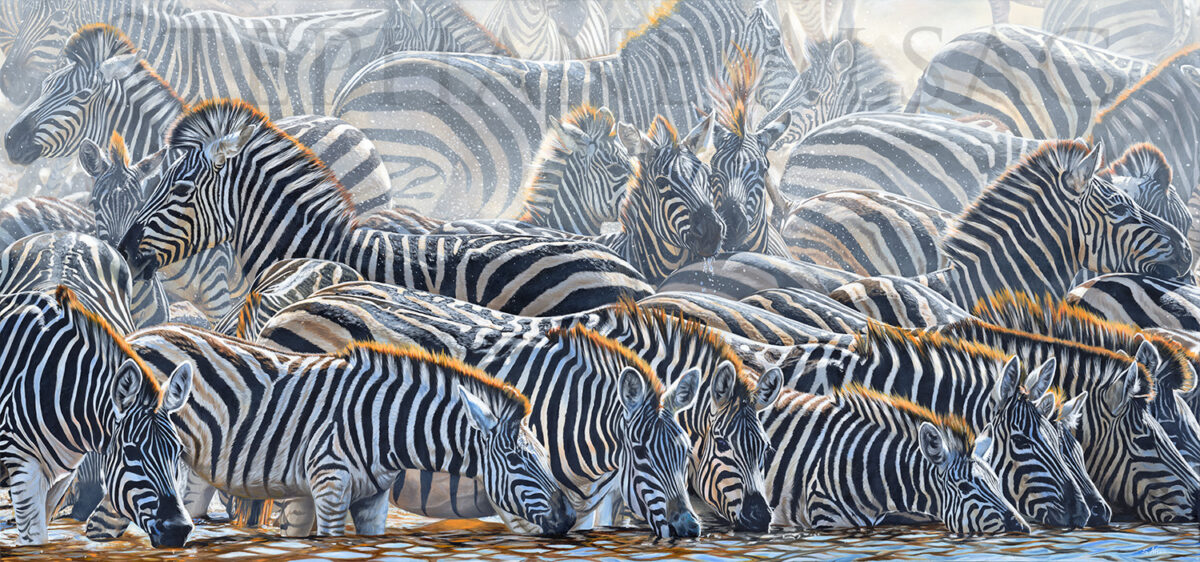
"Zebras are well-known for their ability to stay safe in numbers. They live in large herds, which serve as a defense mechanism against predators. Zebras use their strength in numbers to protect themselves from predators like lions and hyenas."

"When a predator attacks, zebras scatter in different directions, making it difficult for the predator to pursue any one individual. This strategy also increases the likelihood of the predator attacking a different animal in the herd, giving the others a chance to escape."

"Zebras are also very vigilant animals, using their senses to detect predators and giving out alarm calls to warn the rest of the herd to be on high alert. Their speed and stamina also play a role in their defense, allowing them to evade predators and escape attacks."

peinture-animaux-afrique-savane-zebres-migration-peintre-alsac-1200x562.jpg


"Zebras belong to the genus Equus and are closely related to horses and donkeys. There are three main species of zebras: Grévy's zebra, plains zebra, and mountain zebra. Each species has unique characteristics and adaptations that help them thrive in their respective habitats, which range from savannahs to mountainous areas."
 
Last edited:
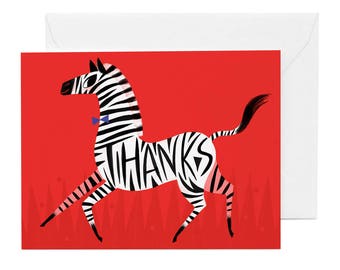
Happy Thanksgiving from a Zebra!
il_340x270.1190314448_p7m9.jpg

"I must say I am glad that I am a Zebra and not a turkey! You Americans are a bit crazy eating millions of turkey's on one day. I hope you have a wonderful day with your families. Spend some time with the ones you love. Blessings."
 
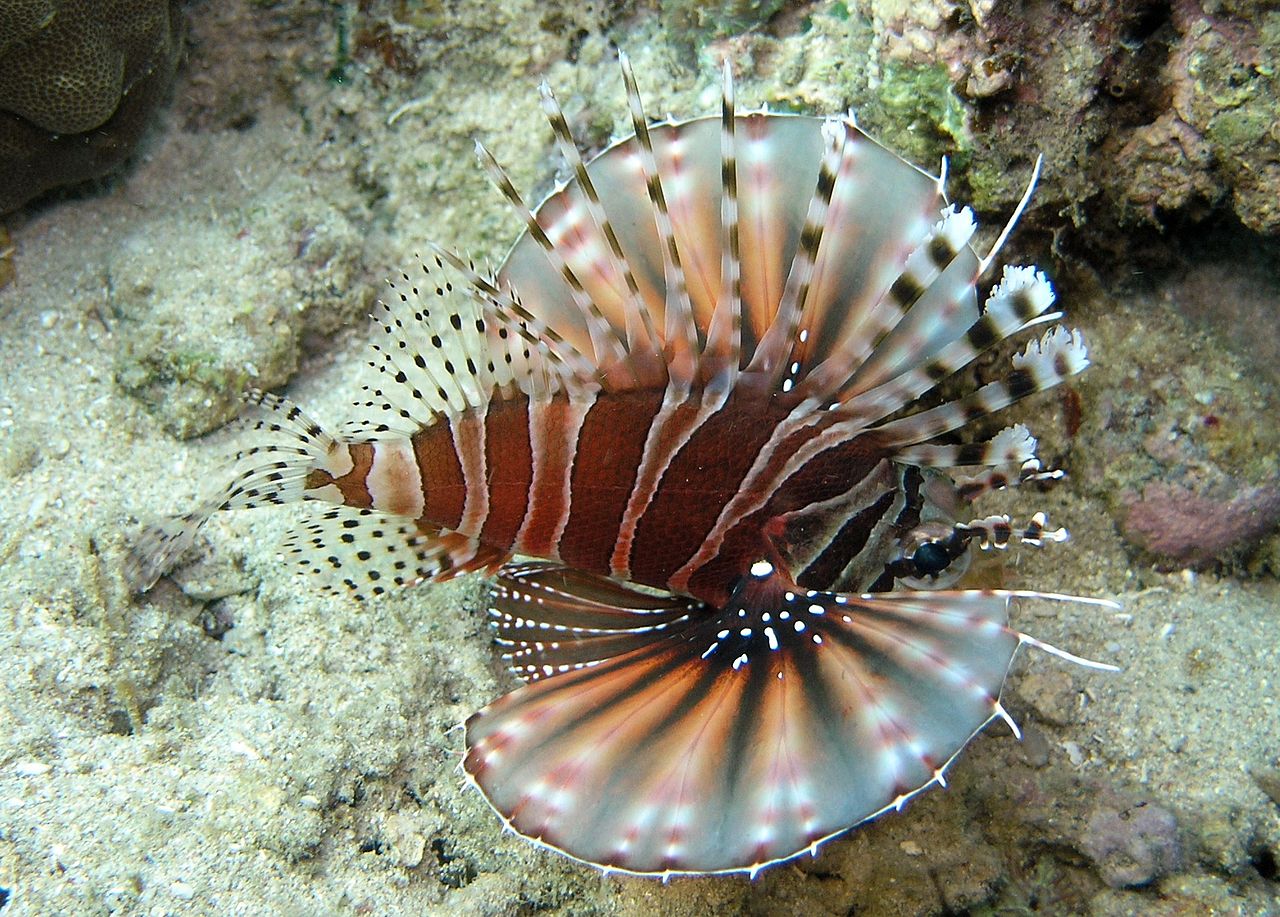
"Dendrochirus zebra, known commonly as the zebra turkeyfish or zebra lionfish among other vernacular names, is a species of marine fish in the family Scorpaenidae."

"The zebra turkeyfish is widespread throughout the tropical waters of the Indo-West Pacific, including the Red Sea."

1280px-Pterois_zebra.JPG
 

We Domesticated Horses, Then Why Not Zebras?

"Zebras are aggressive, unpredictable and have sharp reflexes, owing to their natural habitat. They view us as predators and fight back to remain wild and free!"
"They look like cute and nearly defenseless animals, but they can kick and bite in a desperate attempt to save themselves. Poor, poor zebras! Or are they? If zebras were actually the innocent and docile animals that we imagine them to be, why don’t we ride zebras like horses? It would certainly look classier than a normal horse, right?"

"The first encounter between a horse and a human would have gone something like this":

"Horse (sees a human): Hey pal, what’s that thing? It’s pretty small and not very hairy. I’ve never seen something like that before. Let’s wait and see what it does."

"Man 1: Whoa! That’s a good-looking animal right there. Should we eat it?"

"Man 2: Oh! Look how it runs. It sure is fast. We have enough to eat as it is. Let’s just ride this so we can move around faster!"

"After something like that exchange, it was decided that these wild beasts had to be tamed. Over the years humans and horses both spread out to many more regions, which led to various evolutionary developments, but horses never developed the instinct to fear or flee from humans. It was as though they evolved into comparatively cooler and calmer versions of themselves. Unfortunately, humans don’t know how to maintain an ecosystem balance, so now there are hardly any wild horses left! The free horses that you see galloping around in movies are ‘feral’ horses, which means they’re descendants of domesticated horses, and therefore not technically wild." READ MORE
 
There was a cute movie called Racing Stripes that starred a rideable Zebra. Of course I always wanted one after that. But riding the trot would have been horrible. :oops:
 

The Difference Between Visible Drama and Functional Importance​

3-zebras.-EcoSnap-via-1123rf.jpg


Ecosystems are often explained through the lens of spectacle. Predators chase prey. Prey flees. Conflict unfolds in bursts of speed and violence. These moments are compelling, but they represent only a fraction of how ecosystems actually function. Most ecological work happens slowly, quietly, and without visible confrontation.

Zebras
operate almost entirely in that quieter register. They do not reshape ecosystems through dominance or destruction. They reshape them through consistency. Day after day, season after season, they consume vegetation that other animals cannot use efficiently, altering landscapes in ways that accumulate over time.

This kind of contribution does not photograph well. It does not produce dramatic footage. It requires context to appreciate, which is why it is so often overlooked. Yet without these slow, cumulative processes, the dramatic moments that captivate audiences would not be possible at all.

Bulk Grazers and the Hidden Logic of Grazing Order

Zebras belong to a category of herbivores known as bulk grazers. Their digestive systems are adapted to handle large volumes of coarse, fibrous plant material that is low in immediate nutritional value. This is not an accident of biology. It is a specialization that places zebras at a critical point in the ecological sequence.

After environmental stressors such as drought, fire, or seasonal dieback, grasslands regenerate unevenly. The first grasses to return are often tough, tall, and difficult to digest. For selective grazers, these grasses are effectively unusable. Zebras, however, can process them.

By feeding on this initial growth, zebras perform a preparatory function. They shorten grasses, remove dead material, and stimulate new growth that is softer and more nutrient-dense. This creates conditions that allow other herbivores to move in and feed efficiently. Wildebeest, gazelles, and antelope often follow zebras not by coincidence, but because zebras have made the land usable.

This grazing order is not a hierarchy of strength. It is a division of labor. Zebras take on the least refined resources so that others do not have to. That role expands the carrying capacity of the land, allowing more animals to survive in the same space without exhausting it. (READ MORE)
 

Users who are viewing this thread

Back
Top