
DiscussionHQ - General Discussions
DiscussionHQ is a general discussion forum that has opened December 2024!
We provide a laid back atmosphere and our members are down to earth. We have a ton of content and fresh stuff is constantly being added. We cover all sorts of topics, so there's bound to be something inside to pique your interest. We welcome anyone and everyone to register & become a member of our awesome community.
You are using an out of date browser. It may not display this or other websites correctly.
You should upgrade or use an alternative browser.
You should upgrade or use an alternative browser.
Alfred Hitchhiking
- Thread starter Joe Riley
- Start date


Joe Riley
Seemly Member
- Joined
- Mar 11, 2025
- Messages
- 2,700
Alfred Hitchcock’s Only Movie Based on a True Story Starred Henry Fonda

Henry Fonda and Alfred Hitchcock Switch Up Their Styles in 'The Wrong Man'

"The Wrong Man isn't your typical Alfred Hitchcock film; the master of suspense throws open the doors to a raw, unsettling reality. Like he promises at the beginning of the film, it is not a suspenseful movie, but more a mystery. He is after the chilling fallibility of the justice system, shared through the eyes of Henry Fonda's Manny. And to navigate this uncharted territory, Fonda brings a palpable sense of vulnerability to Manny. To tell this true story, Hitchcock ditches his usual tricks and goes for a plain, realistic style that matches the seriousness of the real events. Still, his genius shows in how he cleverly plays with the camera angles. Tight close-ups make us feel as trapped and desperate as Manny Balestrero. The music by Bernard Herrmann adds to the tension, sounding cold and distant. It's still Hitchcock, but different." READ MORE

Nancy Hart
Well-known member
Henry Fonda and Alfred Hitchcock Switch Up Their Styles in 'The Wrong Man'
I saw that movie on TCM last year. It was pretty good. (Film Noir)

Joe Riley
Seemly Member
- Joined
- Mar 11, 2025
- Messages
- 2,700
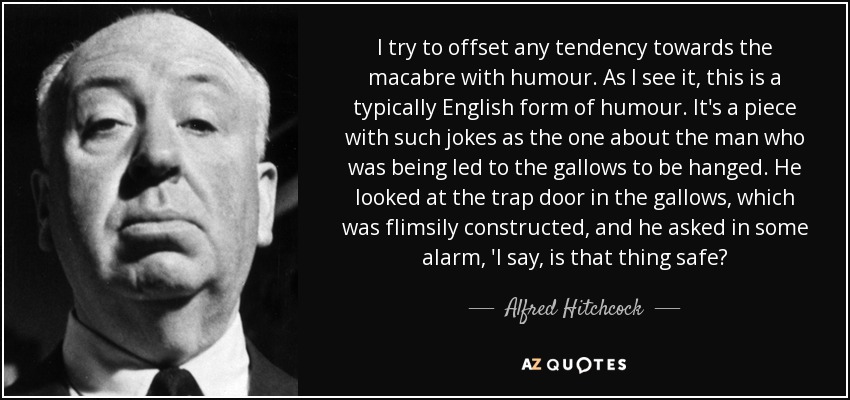
Alfred Hitchcock and the Jesuit
- 30 April AD 2024
- Donald R. McClarey
"At the time, I was a graduate student in philosophy at UCLA, and I was (and remain) a Jesuit priest. A fellow priest, Tom Sullivan, who knew Hitchcock, said one Thursday that the next day he was going over to hear Hitchcock’s confession. Tom asked whether on Saturday afternoon I would accompany him to celebrate a Mass in Hitchcock’s house."
"I was dumbfounded, but of course said yes. On that Saturday, when we found Hitchcock asleep in the living room, Tom gently shook him. Hitchcock awoke, looked up and kissed Tom’s hand, thanking him."
Tom said, “Hitch, this is Mark Henninger, a young priest from Cleveland.”
“Cleveland?” Hitchcock said. “Disgraceful!”
"After we chatted for a while, we all crossed from the living room through a breezeway to his study, and there, with his wife, Alma, we celebrated a quiet Mass. Across from me were the bound volumes of his movie scripts, “The Birds,” “Psycho,” “North by Northwest” and others—a great distraction. Hitchcock had been away from the church for some time, and he answered the responses in Latin the old way. But the most remarkable sight was that after receiving communion, he silently cried, tears rolling down his huge cheeks."
"Any priest can relate hundreds of similar stories about people nearing death who embrace, or return to, the Faith. During life most of us adopt many poses and masks as we proceed through all the helter-skelter activities that make up a life. At the end however we are confronted with the stark reality of death and the time for illusion ceases as we prepare to stand before the Ultimate Reality. Rest in peace Mr. Hitchcock and I hope the angels are laughing at your jokes!"
Joe Riley
Seemly Member
- Joined
- Mar 11, 2025
- Messages
- 2,700
How One Modernist Building in Alfred Hitchcock’s
The Vandamm House moved movie villains inside the sleek spaces of modern architecture.
"Today’s movie audiences readily indulge in the Hollywood trope that murderers, spies, and monsters hide out in high-style modernist homes that embody a sense of elevated separateness. Evil adversaries, from Dr. No in the James Bond series to the vampires in Twilight, spurned decrepit castles and instead took up residence in glass-walled, minimalist buildings. These cinematic structures, whether cantilevered confidently over a precipice or hiding within a dense forest, are cast as incredibly beautiful characters."
Connecting The Dots - THE VANDAMM HOUSE in ‘North By Northwest’
A recent trip to FALLINGWATER, Frank Lloyd Wright’s masterpiece, made me reflect on cantilevered structures. FALLINGWATER was built in 1936 and gracefully embraces the natural terrain as it floats above the rambling waterfall.


Joe Riley
Seemly Member
- Joined
- Mar 11, 2025
- Messages
- 2,700
Alfred Hitchcock Had His Own ‘Twilight Zone’ Before Rod Serling
Alfred Hitchcock Brings His Suspense to the Small Screen

"The first episode of Alfred Hitchcock Presents could not be more indicative of where the series would be headed. "Revenge" first aired on October 2, 1955, and plays out exactly like a 25-minute Hitchcock movie would. This episode was directed by the man himself, and stars Ralph Meeker and Vera Miles as a married couple, simply referred to as Carl and Elsa. One day while Carl is away at work, Elsa is attacked by an unseen intruder and left traumatized. That's when Carl decides to live up to the title of this episode and get revenge on the man who harmed his wife."
"Revenge" is the definition of a meat-and-potatoes thriller. Everything starts out way too idyllic for Carl and Elsa, both literally and speculatively. On one hand, these two reflect the 1950s in the most annoying way possible. Elsa is way too happy with being a "ditzy" wife who has nothing to talk about except for the cakes that she plans on baking that day. Meanwhile, Carl is the typical, nine-to-five, deep-voiced, authoritative husband. On the other hand, as soon as you lay eyes on this married couple, you know there's no way that they'll come out of this episode unscathed. They're just way, way too happy." READ MORE
Joe Riley
Seemly Member
- Joined
- Mar 11, 2025
- Messages
- 2,700
Alfred Hitchcock Presents: "Reward to the Finder"! A janitor finds a wallet with $5200, which leads to conflict with his wife over what to do with it.......

"One day the brute finds a wallet containing 5200 dollars. I figure this is like finding nearly 50,000 dollars in 2013. It is a fortune. Of course, what ensues is the conflict of doing what is right or doing something to make their lives better. The wife has some modest wishes, but Homolka browbeats her into submitting to his wishes, that is for him to have total control over the money."
"To complicate matters they find an ad from the wallet's owner in the newspaper. He lies to her and says that he has seen the man and has been given nothing more than a thank-you. Eventually, she sees him counting the money and knows he is a liar."
"Now she has an epiphany while sitting in the dump he has provided for her (it reminded me of the buildings in Renoir's "Lower Depths."). She decides to start spending what she sees as rightfully half hers. This is the set up for a great conclusion. This is one of my top five best in this series."
A Marriage Made in Hell!
"Oscar Homolka, who played one of the most despicable villains in Hitchcock's canon (the movie Sabotage where he is responsible for the deliberate killing of poor unsuspecting child), plays the ugly, bent over, self-centered husband of a poor woman who uses every waking hour to make his life better. He offers her nothing in return but more of the same.""One day the brute finds a wallet containing 5200 dollars. I figure this is like finding nearly 50,000 dollars in 2013. It is a fortune. Of course, what ensues is the conflict of doing what is right or doing something to make their lives better. The wife has some modest wishes, but Homolka browbeats her into submitting to his wishes, that is for him to have total control over the money."
"To complicate matters they find an ad from the wallet's owner in the newspaper. He lies to her and says that he has seen the man and has been given nothing more than a thank-you. Eventually, she sees him counting the money and knows he is a liar."
"Now she has an epiphany while sitting in the dump he has provided for her (it reminded me of the buildings in Renoir's "Lower Depths."). She decides to start spending what she sees as rightfully half hers. This is the set up for a great conclusion. This is one of my top five best in this series."
Last edited:
Joe Riley
Seemly Member
- Joined
- Mar 11, 2025
- Messages
- 2,700
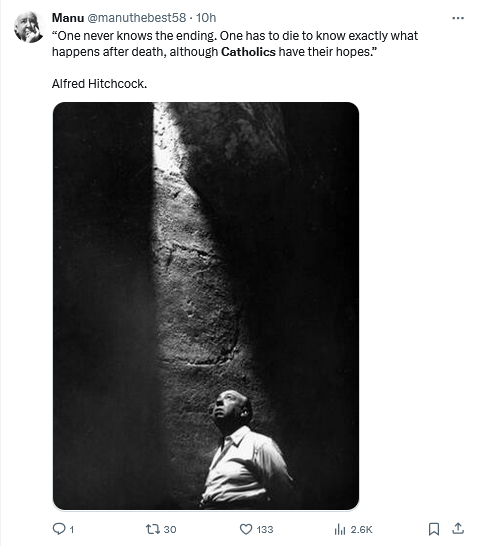
"One never knows the ending."
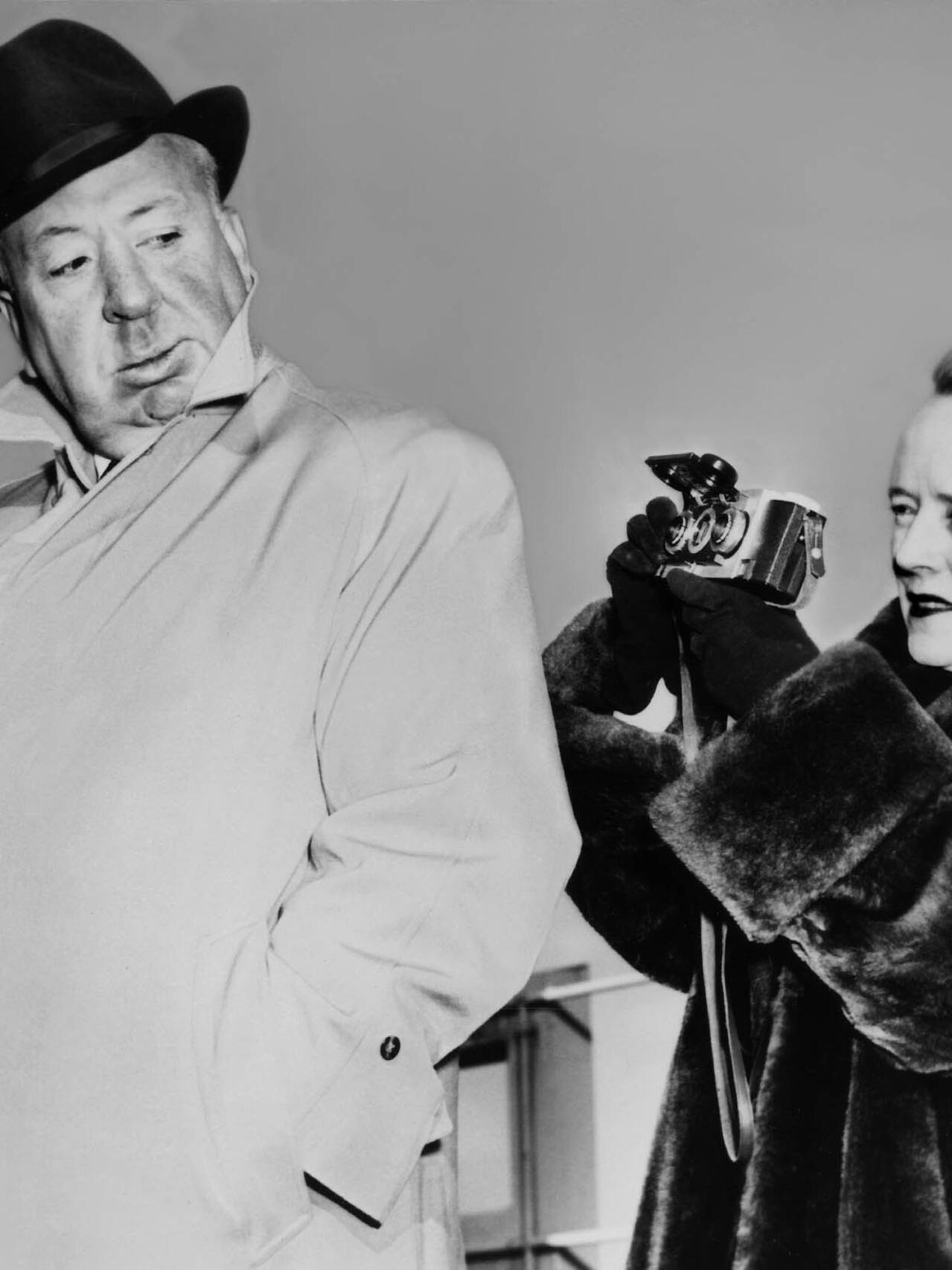
The legendary filmmaker Alfred Hitchcock died of natural causes in 1980 at the age of 80. As he was dying, he reportedly said, "One never knows the ending. One has to die to know exactly what happens after death, although Catholics have their hopes."
Alfred Hitchcock's Longevity......!

The legendary filmmaker Alfred Hitchcock died of natural causes in 1980 at the age of 80. As he was dying, he reportedly said, "One never knows the ending. One has to die to know exactly what happens after death, although Catholics have their hopes."
Alfred Hitchcock's Longevity......!

Users who are viewing this thread
Total: 2 (members: 0, guests: 2)